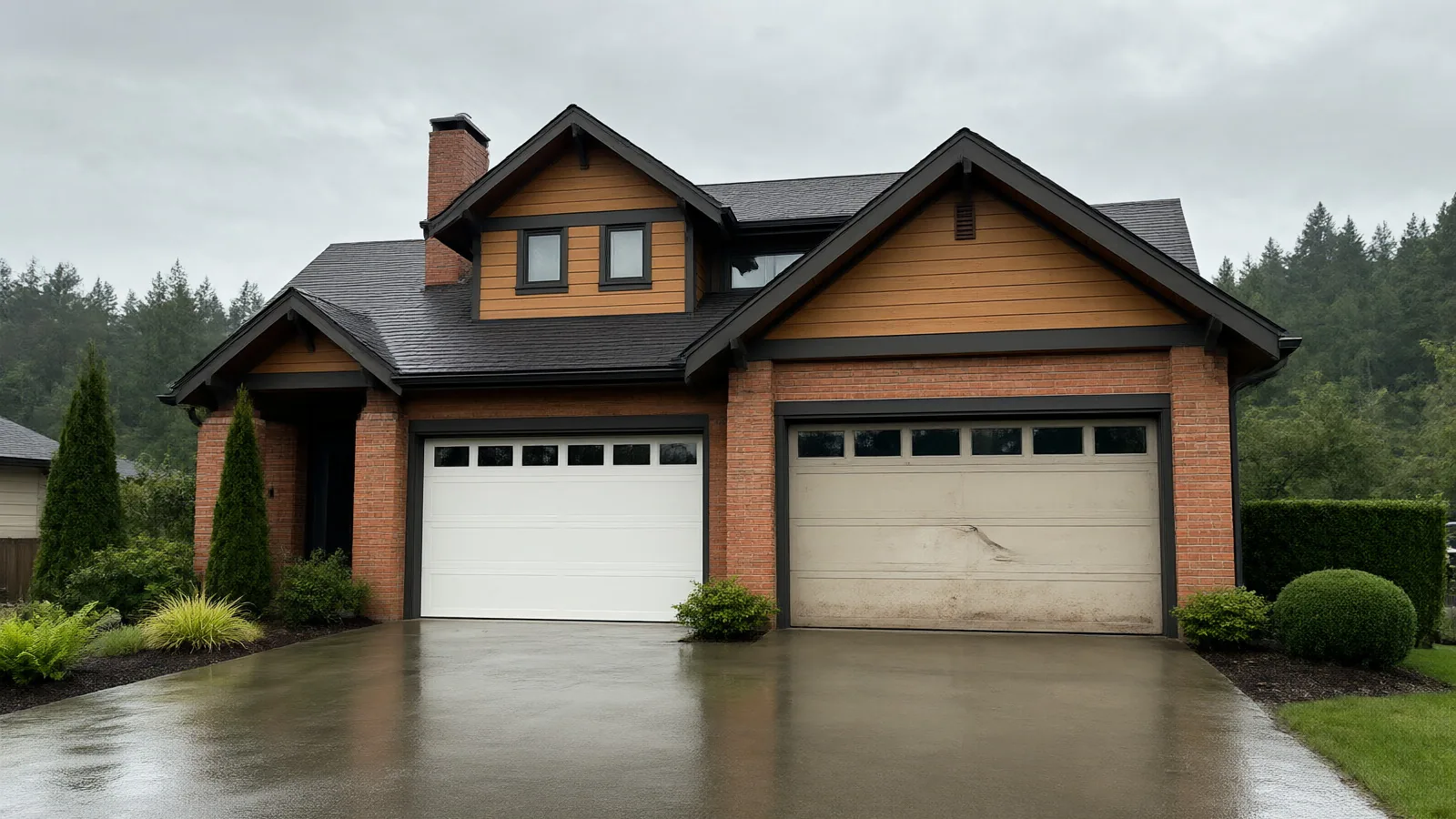
Repair is the right call when one part has failed on a door whose panels and track are still sound. Replace when the door itself is failing, or when you are paying to fix the same door for the second time in two years.
Age is the weakest signal in that decision, and it is the one most quotes lean on. An 18-year-old door with straight panels and a snapped spring is a spring job. A nine-year-old door with rust pushing through the bottom section is a door problem, whatever the calendar says.
What decides whether you repair or replace?
Three questions, and the third is the one nobody asks out loud.
- What failed — a part, or the door? A spring, cable, roller, hinge, sensor or opener is a part. A cracked panel, a rusted-through bottom section, or a door that has twisted out of square is the door.
- How many times have you paid to fix this door in the last two years? One is normal wear. Three is a pattern, and a pattern is what you are really buying when you replace.
- How big is this repair next to a new door? Our rule of thumb: once the quote reaches about a third of what a new door would cost, price both before you approve anything. Not because the repair is bad, but because you should be choosing with two numbers in front of you.
Notice what is missing: the year the door went in. Age only matters where it changes one of those answers, and the way it usually changes them is parts. A 22-year-old door with a discontinued panel profile is a harder repair than a 22-year-old door that still has sections available.
How long does a garage door last?
Homeowners ask for one number. There are three in a garage, and they retire for completely different reasons.
- The door: 20 to 30 years is the usual range for a steel sectional door in a sheltered spot, and less where it takes weather on an exposed wall. Panels, finish and the bottom section decide this. The opener bolted to the ceiling decides none of it.
- The springs: about 10,000 cycles is the typical rating for a standard residential spring. Cycles, not years. Four open-and-closes a day is roughly 1,460 cycles a year, so that rating lands near seven years. A one-a-day household gets closer to twenty-five.
- The opener: 10 to 15 years. Gears, boards and receivers retire it. Modern units add battery backup and app control that older ones cannot.
Those are typical industry ranges, not a measurement of your door. The useful part is that they are independent. DASMA's technical data sheet on spring cycle life says it plainly: spring cycle life does not necessarily coincide with door cycle life, which is tested separately under ANSI/DASMA 109. A broken spring is evidence about a spring. It is not evidence about the panels.
When is repair the better call?
- A single broken spring on a door that still lifts level and runs quietly.
- A snapped cable, a seized roller, a bent hinge, a failed sensor.
- A dead opener on a door whose panels and track are sound.
- Panels that are straight, a finish that is intact, and a bottom section that is still dry.
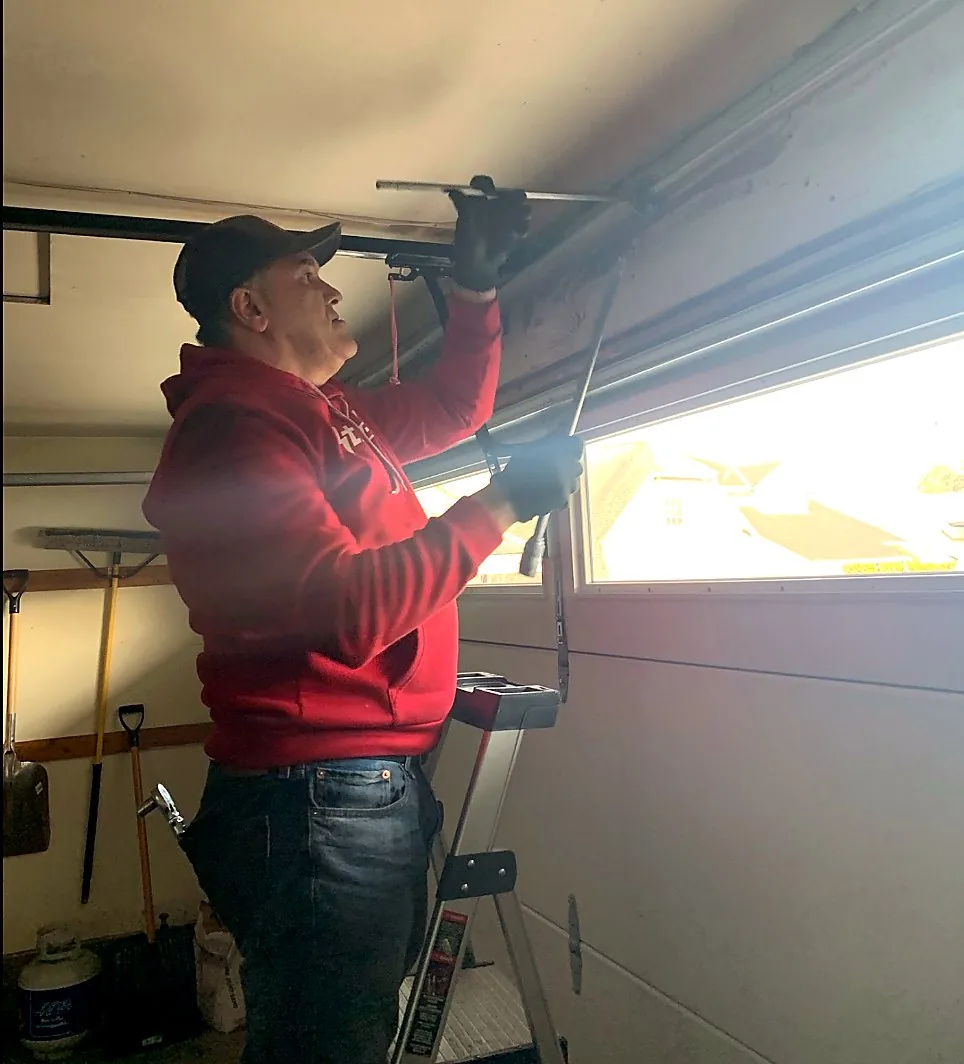
In each of those, a repair returns the door to the condition it was in last month. That is the whole argument for repair, and on a sound door it is usually enough. Our residential repair service covers springs, cables, rollers, sensors and openers, and we say so before we start if the fix isn't worth doing.
When is replacement the honest answer?
- Structural panel damage. Cracks, impact through a section, or a door twisted far enough that it will not run straight however the track is adjusted.
- Rust through the bottom section. Common on the wall that takes prevailing weather and road spray. Once it is through the steel, filler and paint are cosmetic.
- A second or third major repair inside two years. At that point you are financing a failing door one visit at a time.
- Track and hardware past straightening, especially where a failed cable has already bent the track once.
- Panels you cannot get. A discontinued profile means a mismatched section that is visible from the street, or a wait with no date on it.
- A safety problem that is not the door. No photo-eyes, no passing reverse test, a bypassed sensor: that is opener and hardware work. In the US, operators built for sale from 1 January 1993 have had to provide entrapment protection under 16 CFR Part 1211. Openers sold in Canada follow the binational ANSI/CAN/UL 325 version of the same standard. Replacing the opener fixes it. Replacing the door does not. Our guide to why a door will not close walks the sensor and reverse checks.
How much does a garage door replacement cost?
We quote per opening, because size, insulation, window inserts, disposal of the old door and any track work all move the number. There is no honest single price for "a garage door" in Langley.
For a reference point, the 2025 Cost vs. Value report from Zonda put the national average job cost for a mid-range garage door replacement at about $4,672. That is a US figure built for a resale study, not a Langley quote. For what a repair runs here instead, our Langley repair cost guide lists labour and the parts that drive the bill.
Will a new door add value when you sell?
Zonda's 2025 report, published in September, put garage door replacement first out of 28 projects for the second year running: $4,672 job cost against $12,507 value at sale, or 267.7 percent recouped. That is the number contractors quote at you, so here is what sits underneath it.
It is directional, not a promise. The data comes from surveys of US real estate professionals plus Verisk's XactRemodel cost estimates, across 115 American markets. There is no Canadian equivalent in the report. A national model cannot see your street, your local market, or whether a buyer here cares about the door.
What does hold up: the door is the largest thing on the front of the house, and a buyer sees it before they are close enough to judge anything else. A straight door with a working opener removes an objection before it forms. That is a fair reason to replace a tired door. It's not a reason to expect $12,000 back.
What should you check before you approve either quote?
Ten minutes with a flashlight tells you most of what the technician will.
- The bottom section, from inside. Look along the inside face with a light. Bubbling paint and orange bloom at the seams mean rust is working through, which is a panel problem rather than a hardware one.
- The panel seams, door closed. Stand inside and sight down the horizontal joints. A door that has twisted shows a gap that widens toward one side.
- The balance test. Pull the red release, lift the door to waist height and let go. It should stay where you put it. If it drops, or takes real effort to lift, the spring or a cable has failed, and the signs of a broken spring explain what you are looking at.
- What the quote names. Labour, parts, disposal, after-hours rate. A line that says "spring replacement" with no wire size or cycle rating is a line you can't compare against the next quote.
- Whether you have the second number. Ask for the repair and the replacement on the same visit, in writing. A company that will only quote one of the two is steering you.
Can you stage the work instead of doing it all at once?
Often yes, and it usually costs less than either extreme.
- Fix the safety item now. Springs, cables and sensors are not things to defer.
- Replace the opener if the opener is what failed and the door is sound. Current entrapment protection, battery backup and app control cost a fraction of a door.
- Replace the door when the panels justify it, and keep the newer opener. It will outlive the old door.
We quote each stage separately so you can see what each one buys. If the door is going anyway, our residential installation page covers what a new door involves.
What do we see on Langley doors?
Most of the replacement calls we get here are not about age. They are about the bottom section: road spray, wet winters and a wall that never fully dries, rusting from the inside where nobody looks. The doors that reach twenty-five years are the ones on sheltered sides that get washed and lubricated.
Springs follow cycles rather than weather, so they fail in July as often as January. The doors most likely to be worth replacing sit on older townhouse complexes, where a discontinued panel profile makes a section repair impossible rather than merely expensive.
Sources and standards
- 2025 Cost vs. Value Report — Zonda (published September 2025): garage door replacement job cost, value at sale and cost recouped, from US realtor surveys and XactRemodel estimates across 115 markets.
- DASMA Technical Data Sheet 190 — Factors Affecting Spring Cycle Life (reaffirmed 2021): handling, installation and use as drivers of spring cycle life, and the distinction from door cycle life under ANSI/DASMA 109.
- 16 CFR Part 1211 — Safety Standard for Automatic Residential Garage Door Operators: entrapment protection for operators manufactured for US sale on or after 1 January 1993.
Call 604-388-9868 or send us the details with a photo of the door and the opener label. We will tell you which of the two you are facing before anyone drives out.